Stromatolites: Interaction of Microbes with Sediments
Stromatolites: Interaction of Microbes with Sediments
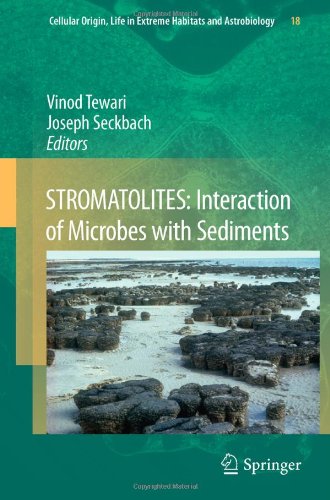
by: Vinod Tewari, Joseph Seckbach, 2011
Download... (ifile.it) 39.56 MB
pages: 746
bookmarked: yes
paginated: yes
vector: yes
cover: yes
searchable: yes
doi: 10.1007/978-94-007-0397-1
series: Cellular Origin, Life in Extreme Habitats and Astrobiology
volume: 18
googlebookid:
Description:
STROMATOLITES: Interaction of Microbes with Sediments provides an overview and latest information about the formation of Stromatolites as a result of interaction of microbes with sediments. Eighty-three expert scientists from twenty-seven countries present the chapters in this volume which have been reviewed by thirty four referees. The volume deals with ancient to modern examples of stromatolites and microorganisms which are observed in various diverse environments, such as: marine, nonmarine, lacustrine and extreme geographical areas covering almost the whole earth. The reviews are original articles written by leading experienced experts, some chapters deal with latest instrumental techniques used for the study of microbes and Stromatolites. Other chapters have been contributed by young researchers who revealed updated data on Stromatolites. The astrobiological implications of early microbiota, sulfur isotopic ratios, microbialites in extreme conditions on earth has opened up new vistas in the search of extraterrestrial life.
Cover
Stromatolites: Interaction of Microbes with Sediments
ISBN 9789400703964
TABLE OF CONTENTS
Introduction to Stromatolites
FOREWORD
Acknowledgements
Part 1: AR CHAEAN: PROTEROZOIC STR OMAT OLITES AND MICROBIOTA
Proterozoic Stromatolites of the Itaiacoca Group, Southeast Brazil
1. Introduction
1.1. Geological Setting
2. Stromatolites of the Itaiacoca Group
2.1. Region of Itapeva
2.2. Region of Bom Sucesso de Itararé
2.3. Region of Abapã
3. Discussion
4. Acknowledgments
5. References
Meso-Neoproterozoic Stromatolites from the Indravati and Chhattisgarh Basins, Central India
1. Introduction
2. Stromatolites from the Indravati and Chhattisgarh Basins
2.1. Previous Work
2.2. Present Study and Systematic Description of Stromatolites from the Indravati Basin
2.2.1. Group Colonnella Komar, 1964
2.2.2. Group Gymnosolen Steinmann, 1911
2.2.3. Group Kussiella Krylov, 1963
2.2.4. Group Boxonia Korolyuk, 1960
2.2.5. Boxonia pertaknurra Walter
3. Paleobathymetry and Paleoenvironment
4. Stromatolites from the Chhattisgarh Basin
5. Correlation of Meso-Neoproterozoic Stromatolitic Formations
6. Discussions and Conclusions
7. Acknowledgments
8. References
Stromatolites and Cyanobac terial Mats in Peritida l Evaporative Environments in the Neoproterozoic of Bas -Congo (Democratic Republic of Congo) and South Gabon
1. Introduction
2. Regional Setting and Stratigraphic Framework
2.1. The West Congo Supergroup in Bas-Congo (Mayumbian Basin)
2.2. The Neoproterozoic of Gabon (Nyanga Basin)
3. Results
3.1. The Cyanobacterial Mats in Bas-Congo
3.1.1. Depositional Setting (C2 and C3 Subunits)
3.1.2. Microbial Description and Discussion
3.1.3. Geochemistry
3.2. The Stromatolitic Levels in the Nyanga Basin
3.2.1. Mouila Section
3.2.2. Facies Assemblages and Stromatolitic Paleoenvironment
3.2.3. Sedimentary and Diagenetic History
3.2.4. Fungal Diagenesis
3.2.5. Geochemistry
4. Conclusion
5. Acknowledgments
6. References
Microbiota and Microbial Mats Within Ancient Stromatolites in South China
1. Introduction
2. Geological Setting
3. Materials and Preservation
4. Microbial Mats of Ancient Stromatolites
4.1. Domed Stromatolite-Building Microbial Mats
4.2. Conical Stromatolite-Building Microbial Mats
4.3. Stratiform Stromatolite: Building Microbial Mats
5. Conclusions
6. Systematics of Microbiota of Ancient Stromatolites
7. Acknowledgments
8. References
Morphological Changes in Microscopic–Megascopic Life and Stromatolites Recorded During Late Palaeoproterozoic–Neoproterozoic Transition: The Vindhyan Supergroup, India
1. Introduction
2. The Vindhyan Supergroup
2.1. Age of the Vindhyan Supergroup
3. Stromatolite Occurrences in the Vindhyan Supergroup
4. The Fossil Assemblage from the Vindhyan Supergroup
4.1. Life During Palaeoproterozoic–Mesoproterozoic Time (1,700–1,000 Ma)
4.2. Life During Neoproterozoic Times (1,000–542 Ma)
5. Role of Taphonomy in Morphological Diversity
6. Discussion and Conclusion
7. Acknowledgements
8. References
Farrel Quartzite Microfossils in the Goldsworthy Greenstone Belt, Pilbara Craton, Western Australia
1. Introduction
2. Geology and Stratigraphy
3. Sedimentary Petrology of Black Chert
4. Samples and Methods
5. Occurrences and Features of the Five Main Morphologies and Related Structures
5.1. Thread-Like Structures
5.2. Film-Like Structures
5.3. Spheroidal Structures
5.3.1. Small Spheroids (<15 mm)
5.3.2. Large Spheroids (>15 mm)
5.4. LENTICULAR TO Spindle-Like Structures
6. Significance and Unresolved Problems of the Farrel Quartzite Assemblage
7. Summary
9. References
Ediacaran Krol Carbonates of the Lesser Himalaya, India: Stromatolitic Facies, Depositional Environment and Diagenesis
1. Introduction
2. Krol D Member Facies
3. Original Mineralogy and Diagenesis of Krol D Member Oolites
3.1. Ooids and Coated Grains
3.2. Original Mineralogy of Grains
3.3. Interpretation
4. Diagenesis
4.1. Micrite Envelopes and Micritisation
4.2. Marine Cements
5. Krol Dolomitisation and Dolomite Precipitation
6. Carbon Isotope Chemostratigraphy of the Ediacaran Krol Carbonates
7. Discussions and Conclusion
8. Acknowledgements
9. References
Part 2: PHANEROZOIC STR OMAT OLITES
Aptian to Cenomanian Deeper-Water Hiatal Stromatolites from the Northern Tethyan Margin
1. Introduction
2. Occurrences in Austria (Vorarlberg)
2.1. Aptian
2.2. Aptian–Albian Boundary Interval
2.3. Albian
2.4. Cenomanian
3. Occurrences in Eastern Switzerland
3.1. Aptian
3.2. Albian
3.3. Cenomanian
4. Occurrences in Central Switzerland
5. Occurrences in Southeastern France
5.1. Aptian
5.2. Albian
5.3. Cenomanian
6. Discussion
6.1. Association with Deeper-Water Hiatal Surfaces and Condensed Sediments
6.2. Morphology and Mineralization
6.3. Association with Phosphogenesis
6.4. Environmental Conditions of Stromatolite Growth
6.5. Microbes
6.6. Regional Paleoceanographic Conditions
6.7. Global Environmental Conditions
7. Conclusions
8. Acknowledgments
9. References
Phosphatic Microbialites in the Triassic Phosphogenic Facies of Svalbard
1. Introduction
2. Geological Background
3. Triassic Phosphogenic Facies
4. Phosphatic Microbialites
4.1. Petrographic Features
4.2. Microbial Fabrics
4.3. Geochemical Features
4.3.1. Organic Carbon Versus Mineral Phosphorus
4.3.2. Isotopic Composition of Apatitic Carbon and Sulfur
4.3.3. Isotopic Composition of Pyritic Sulfur
4.3.4. Rare Earth Elements
5. Discussion
6. Conclusions
7. Acknowledgments
8. References
Microbialites in the Middle–Upper Jurassic Ammonitico Rosso of the Southern Alps (Italy)
1. Introduction
2. Geologic and Stratigraphic Setting
3. Methods
4. Characteristics of the Rosso Ammonitico Veronese
4.1. General Aspects and Faunal Content
4.2. Early Diagenetic Nodules
4.3. Lithoclasts
4.4. Microbialites
4.4.1. Oncoids
4.4.2. Domal and Columnar Microbialites
5. Basic Rhythms
6. Discussion
7. Conclusions
8. Acknowledgements
9. References
Microbialites as Markers of Biotic and Abiotic Events in the Karst District, Slovenia and Italy
1. Introduction
2. Geological Framework
3. Microbialites Through Time in the Karst District Region: Stratigraphy and Paleoenvironments
3.1. Early Cretaceous
3.2. Hauterivian–Barremian–Aptian
3.3. Albian
3.4. Late Cretaceous
3.4.1. Late Cenomanian
3.4.2. Upper Turonian (?)–Coniacian
3.4.3. Santonian
3.4.4. Campanian
3.4.5. Maastrichtian
4. K/T Boundary
5. Paleogene
6. Danian
7. Discussion
8. Conclusions
9. Acknowledgments
10. References
Lower Cretaceous Stromatolites in Far East Asia: Examples in Japan and Korea
1. Introduction
2. Stromatolite-Bearing Lower Cretaceous Strata
3. Morphotypes of Stromatolites
3.1. Stromatolites from the Kanmon Group
3.2. Stromatolites from the Gyeongsang Supergroup
4. Discussion
4.1. Stromatolite-Forming Environments
4.2. Transition of Stromatolite-Forming Area
5. Summary
6. Acknowledgments
7. References
Part 3: MODERN STROMATOLITES (MARINE, LACUSTRINE, HOTSPRINGS)
Modern Marine Stromatolitic Structures: The Sediment Dilemma
1. Bahamian Stromatolites and Microbialites
2. Lamination Formation
3. Microbial Mat Mineral Precipitation
4. Preservation
5. Discussion
5.1. What Are the Limits to Schizothrix Mat’s Abilityto Create Laminated Structures?
5.2. To What Degree Does Sedimentation Really Drive the Formation of Modern Marine Stromatolitic Layering?
5.3. In Comparing Modern Stromatolites with Ancient Examples, What Do We Do with the Coarse Sediment?
6. Conclusions
7. Acknowledgments
8. References
Are Cyanobacterial Mats Precursors of Stromatolites?
1. Microbial Mats as Precursors of Stromatolites
2. The Persistent Cyanobacteria
2.1. Cyanobacterial Attributes
2.2. Environmental Range of Cyanobacteria
3. Cyanobacterial Microbial Mats
3.1. Who Can Build Stromatolites?
3.2. What Does It Take to Build a Stromatolite?
4. Concluding Remarks
6. References
Living Stromatolites of Shark Bay, Western Australia: Microbial Inhabitants
1. Modern Living Stromatolites
2. Assessment and Comparative Analyses of Microbial Populations of Shark Bay Stromatolites and Surrounding Seawater
2.1. Cyanobacterial Communities
2.2. Heterotrophic Bacterial Communities
2.3. Archaeal Communities
3. Adaptation of Stromatolite Microorganisms to a Hypersaline Environment
4. Acknowledgements
5. References
Character, Analysis, and Preservation of Biogenicity in Terrestrial Siliceous Stromatolites from Geothermal Settings
1. Introduction
2. Mechanisms of Formation and Diagenesis
2.1. Environmental Effects on Silica Chemistry/Mineralogy
2.2. Role of Biological Templates and Fossilization
2.3. Physicochemical and Hydrodynamic EFFECTS on Stromatolites
2.4. Diagenesis
3. Analytical Techniques
3.1. Sampling and Preserving Fresh Sinter Deposits
3.2. Analysis of Freshly Deposited Sinter
3.3. Analysis of Modern to Fossil Terrestrial Hot Spring Deposits
4. Summary and Significance of Hot Springs and Their Deposits
5. Acknowledgments
6. References
Microbial Diversity in Modern Stromatolites
1. Introduction
2. The Modern Stromatolite Habitats
2.1. Diversity in Marine Stromatolites
2.1.1. Hypersaline Stromatolites in Shark Bay
2.1.2. Open Ocean Stromatolites
2.2. Diversity in Freshwater Stromatolites
2.2.1. Ruidera Pools, Spain
2.3. Diversity in Artificial Microbialites
3. Dominant Phyla in Modern Stromatolites
3.1. The Cyanobacteria
3.2. The Alphaproteobacteria
4. A New Beginning: The Future of Microbial Diversity Studies in Stromatolites
4.1. Metagenomics in Microbialitic Mats
4.2. Correlating Diversity with Function
5. References
Microbialites and Sediments: A 2-Year Record of Burial and Exposure of Stromatolites and Thrombolites at Highborne Cay Bahamas
1. Introduction
1.1. Study Site
2. Methods
2.1. Data Collection
2.2. Data Analysis
2.2.1. Burial and Exposure
2.2.1.1. Sedimentation Patterns for Individual Stakes
2.2.1.2. Sedimentation Patterns by Reef Zone
2.2.1.3. Duration of Microbialite Exposure and Burial Events
3. Results
3.1. Sedimentation Patterns at Individual Stakes
3.2. Sedimentation Patterns by Reef Zone
3.3. Duration of Microbialite Exposure and Burial Events
4. Discussion
5. Summary and Conclusions
6. Acknowledgments
7. References
Modern Stromatolite Ecosystems at Alkaline and Hypersaline High-Altitude Lakes in the Argentinean Puna
1. Introduction
2. Study Area
3. Environmental Physicochemical Conditions
4. Morphological Description of Stromatolites
5. Mineral and Chemical Composition of Stromatolites
6. Biological Composition of Stromatolites
7. Conclusion
8. Acknowledgments
9. References
Part 4: MODERN INSTRUMENTAL TECHNIQUES FOR THE STUDY OF STROMATOLITES AND MICROBIOTA
Micro-FTIR Spectroscopic Imaging of ~1,900 Ma Stromatolitic Chert
1. Introduction
2. Regional Setting, Stratigraphy, Age, and Stromatolites
3. Materials and Methods
3.1. Sample
3.2. Micro-FTIR Spectroscopic Imaging Analysis
4. Results
5. Discussion: Characterizing Aliphatic CH Moieties (R3/2)
6. Conclusions
7. Acknowledgments
8. References
Elemental and Isotopic Analysis by NanoSIMS: Insights for the Study of Stromatolites and Early Life on Earth
1. Introduction
1.1. Elemental Distributions in Stromatolites
1.2. Sulphur Isotopes
1.3. Carbon Isotopes
2. NanoSIMS Analysis
2.1. Elemental Mapping in Stromatolites
2.1.1. Stromatolite Samples
2.1.2. Stromatolite Results
2.1.2.1. Lake Thetis Stromatolite
2.1.2.2. Shark Bay Stromatolite
2.1.2.3. 2.72 Ga Stromatolite
2.2. Sulphur Isotope Analysis
2.2.1. NanoSIMS Setup
2.2.2. Factors Affecting Accuracy and Precision
2.2.2.1. Detector Ageing
2.2.2.2. QSA Effects
2.2.2.3. Poisson Counting Precision
2.2.2.4. Reproducibility
2.2.2.5. Accuracy
2.2.3. Samples
2.2.4. Sulphur Isotope Results
2.3. Carbon Isotope Analysis
2.3.1. Samples
2.3.2. Carbon Isotope Results
3. Summary
4. Acknowledgements
5. References
Stromatolites, Organic-Walled Microorganisms, Laser Raman Spect rosc opy, and Confocal Laser Scanning Microscopy of the Meso-Neoproterozoic Buxa Formation, Ranjit Window, Sikkim Lesser Himalaya, NE India
1. Introduction
1.1. Geological Setting and Stratigraphy
2. Fossil Locality
3. Previous Work
3.1. Sedimentological and Paleobiological
3.1.1. Age of the Buxa Formation
4. Stromatolite
5. Materials and Methods
5.1. Materials Studied
6. Optical Microscopy
7. Confocal Laser Scanning Microscopy
8. Raman Spectroscopy and Imagery
9. Organic-Walled Microfossils
9.1. Petrography of the Microfossiliferous Cherts
9.1.1. Diversity and Abundance of Microfossils
9.1.2. Microbial Assemblage
10. Raman Index of Preservation (RIP) of the Buxa Fossils
11. Discussion and Conclusions
12. Astrobiological Implications (Mars Sample Return) of the Buxa Microfossils
13. Acknowledgments
14. References
PART 5: GEOCHEMISTRY AND GEOMICROBIOLOGY OF STROMATOLITES AND MICROBIOTA
Petrology, Elemental and Isotope Geochemistry and Geomicrobiology of Carbonate Infillings and Biofilms Lining Cracks Below the Neoproterozoic (Sturtian) Cap Carbonate in the Mirbat Inlier, Southernmost Oman
1. Introduction and Previous Work
2. Methods
2.1. Petrological Analysis
2.1.1. Scanning Electron Microscope Analysis
2.1.2. Isotopic Analysis
3. Descriptions
3.1. Field and Hand Specimen
3.2. Petrography
3.3. Element Mapping
3.4. SEM Scans of Laminae
3.5. Isotope Geochemistry
4. Interpretation
5. Conclusions
6. Acknowledgments
7. References
Cave Geomicrobiology in India: Status and Prospects
1. Introduction
2. Geomicrobiological Studies of Caves in the Indian Subcontinent
3. Sahastradhara Caves, Dehradun
3.1. Brahmakhal (Prakateshwar) Cave, Uttarkashi, Uttarakhand
3.2. Borra Caves, Vishakapatanam, Andhra Pradesh
3.3. Meghalaya Caves, Meghalaya
4. Stable Isotope and Paleoclimate Studies in the Indian Caves
5. Future Prospects of Geomicrobiological Studies of Indian Caves
6. Acknowledgments
7. References
The Role of Sulfate Reduction in Stromatolites and Microbial Mats: Ancient and Modern Perspectives
1. Introduction
2. Early Evolution of Sulfate Reduction
3. Sulfate Reduction Rates in a Range of Mats
4. Role of SRB in Carbonate Precipitation in Modern Stromatolites
4.1. Aragonite Precipitating Habitats
4.2. Dolomite Precipitating Habitats
5. Diversity of SRB in Microbial Mats and Stromatolites
6. Interaction of SRB with Oxygen
7. Role of SRB Migration in Microbial Mats
8. Recent Developments
9. Acknowledgments
10. References
Carbonate Sediments Microbially Induced by Anaerobic Oxidation of Methane in Hydrocarbon-Seeps
1. Introduction
2. Ancient Hydrocarbon Seeps in Japan
3. Campanian (Late Creteceous) Hydrocarbon Seeps in Nakagawa
3.1. Geological Settings
3.2. Lithological and Chemical Signatures
3.2.1. Yasukawa Seep Carbonate
3.2.2. Omagari Seep Carbonate
3.2.3. Comparison Between the Yasukawa and Omagari Seeps
4. Summary
5. Acknowledgments
6. References
Biostratigraphy, Sedimentation and Chemostratigraphy of the Tertiary Neotethys Sediments from the NE Himalaya, India
1. Introduction
2. Arunachal Pradesh
3. Assam
3.1. Mikir Hills
3.2. Dhansiri Valley
3.3. Upper Assam
4. Naga Hills (Nagaland and Manipur)
5. Meghalaya (Shillong Plateau)
6. Cretaceous–Paleogene Boundary in the Shillong Plateau Meghalaya
7. Paleocene Eocene Thermal Maxima
8. Mizoram
9. Tripura–Cachar Fold Belt
10. Discussion and Conclusions
11. Acknowledgements
12. References
Evidence of Microbial Biomineralization in Modern and Ancient Stromatolites
1. Introduction
2. Stromatolite Mineral Texture
3. Biogenic Organo-Mineral Structures
3.1. Bacterial Fossil Remains
3.2. Extracellular Substances Fossil Remains
4. Discussion and Conclusion
6. References
Possible Fe Isotope Fractionation During Microbiological Processing in Ancient and Modern Marine Environments
1. Introduction
2. Background and Methodology
2.1. Structure of the Biofilm Mats and Their Microenvironments
2.1.1. The Oncoid-Like Nodules in Echinocardium cordatum
2.1.2. Iron Granules in the Intestinal Wall of Echinocardium cordatum
2.1.3. The Iron-Encrusted Microbial Community of Montacuta ferruginosa
2.2. Geological Setting of Limestones
2.3. Iron Isotope Analysis
3. Results
4. Discussion
4.1. Origin of the Iron
4.2. Iron Isotopic Composition
4.2.1. Marine Porewaters and Recent Organisms
4.2.2. Implications for the Jurassic Rosso Ammonitico
5. Conclusions
6. Acknowledgments
7. References
New Representations on the Nature of Stromatolites
Sec1_30
2. References
Sulfur Isotopes in Stromatolites
1. Introduction
2. Sulfur Isotope Systematics
3. The Isotope Record of Microbial Sulfur Cycling
3.1. The Modern World
3.2. The Phanerozoic
3.3. The Precambrian
4. Conclusions and Future Research Directions
6. References
PART 6: ASTROBIOLOGY
Preservation Potential and Habitability of Clay Minerals- and Iron-Rich Environments: Novel Analogs for the 2011 Mars Science Laboratory Mission
1. Introduction
2. Implications of Organics on Mars
3. Background
3.1. Phyllosilicate Deposits and MSL Landing Site Candidates
3.2. Preservation of Organics on Mars
3.3. Preservation of Organics in Phyllosilicates
3.4. The Rio Tinto Analog for Near-Subsurface Clay Deposits
3.5. Habitability of Phyllosilicates
3.6. Analytical Approach
3.6.1. Total Viable Biomass
3.6.2. Gram-Negative Biomass
4. Approach and Study Areas
4.1. Hyperarid Atacama Desert
4.2. Arid Death Valley
4.3. Moist Coastal Fog Region
5. Viable Biomass in Phyllosilicate Mineral Environments
6. Concluding Remarks
8. References
The Sulfur Cycle on the Early Earth: Implications for the Search of Life on Europa and Elsewhere
1. Introduction
2. Earliest Evidence of Sulfate-Reducing Bacteria and Their Modern Analogs
3. Factors that Are Needed for Understanding the Precambrian Sulfur Cycle
4. Bacterial Sulfate Reduction
5. Sulfur Patches on Europa: Is There Evidence for Biogenicity?
6. The Antarctic Dry Valley Lakes: Possible Relevance in the Search for Biogenicity
7. Discussion and Conclusion
8. Acknowledgments
9. References
PART 7: SUMMARY, CONCLUSIONS AND FUTURE PROSPECTS
Summary, Conclusions, and Future Prospects
1. References
Author Index
Subject Index
 با گسترش روزافزون و اهميت بيش از پيش رسانههاي ديجيتال در دنياي معاصر؛ بهرهگيري از اين ابزارها جهت تسريع در رشد علمي كشور ناگزير است. از اين رو هدف از راهاندازي اين وبلاگ ايجاد فضايي جهت بحث و تبادل نظر در خصوص رشتهي زمين شناسي به صورت عام و گرايش چينه و فسيل شناسي به صورت خاص و ارائهي كتب و مقالات مرتبط با اين شاخه از علوم است.
اينجانب كه خود، فارغ التحصيل كارشناسي ارشد چينه و فسيل شناسي از دانشگاه تهران هستم، قصد دارم تا با ياري خدا و همكاري و راهنمايي شما عزيزان، گامي مختصر در اين راه برداشته و خدمتي كوچك به خيل عظيم جوانان جوياي علم ايراني نمايم.
لازم به ذكر است، اغلب مطالب اين وبلاگ را جهت گسترش بيشتر مطلب، بر روي وبلاگ ارزشمند دوستانم در انجمن علمي-دانشجويي زمينشناسي دانشگاه تهران به آدرس http://azut.blogfa.com نيز قرار خواهم داد.
يا حق...
نوشتههای پیشین
- آبان ۱۳۹۱
- شهریور ۱۳۹۱
- مرداد ۱۳۹۱
- فروردین ۱۳۹۱
- دی ۱۳۹۰
- آذر ۱۳۹۰
- تیر ۱۳۹۰
- خرداد ۱۳۹۰
- اسفند ۱۳۸۹
- آبان ۱۳۸۹
- شهریور ۱۳۸۹
- مرداد ۱۳۸۹
- تیر ۱۳۸۹
- خرداد ۱۳۸۹
- اردیبهشت ۱۳۸۹
- فروردین ۱۳۸۹
- اسفند ۱۳۸۸
- بهمن ۱۳۸۸
- دی ۱۳۸۸
- آذر ۱۳۸۸
- آبان ۱۳۸۸
- مهر ۱۳۸۸
- شهریور ۱۳۸۸
- مرداد ۱۳۸۸
- اردیبهشت ۱۳۸۸
- فروردین ۱۳۸۸
- اسفند ۱۳۸۷
- دی ۱۳۸۷
- آذر ۱۳۸۷
- آبان ۱۳۸۷